When most people of our generation think of Islam, what is the first thing that comes to mind? For me, the first memory of actually understanding what Islam was happened on September 11, 2001. It is a date that many can easily recall. It was a date where planes did not fly overhead. It was a date where many of us can recall exactly where we were when we heard the announcement either first on the radio (in my case) or watched the events unfold on television. It was an event that impacted our lives forever.
Being from the east side of Michigan, my dad works in Dearborn, MI. Outside of the Islamic Empire, it is said to be the area where there is the most gathering of Islamic people. On September 11, 2001, my dad was sent home from work out of his own protection. When that day happened, I did not quite understand the significance of how this all tied together. I was lucky enough, however, to be in tenth grade at the time. My history teacher thought that his students were old enough to understand what was happening in the world around us and he thought that we needed to understand how the Islamic Empire has effected the Western world throughout history. He took three weeks out of his normal lesson to teach us about the Quran. We covered the Five Pillars of Islam and he explained at length the concept of jihad.
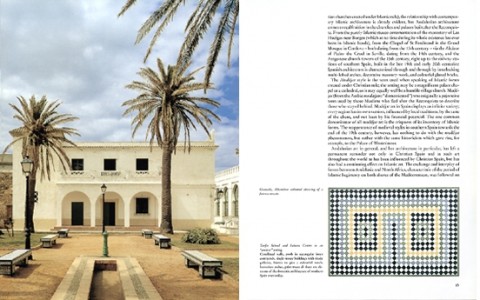
Perhaps one of the most significant memories from that three week long lesson consists of learning about the Battle of Granada. How does a city from Spain tie into the Islamic Empire? First, it is important to understand the geography of the Islamic Empire. Here is a detailed map that highlights the Islamic Empire at its height. Spain was one of the many countries that fell to the Islamic Empire, as early as 750 CE. The Spanish Muslims, known as Moors, dominated the country. Their presence was known throughout the country. Moorish architecture is still found today. Here is an example of the Moorish arches that are famous in Spain. Here is yet another example of the Moorish architecture. This last was as far north as Toledo. It is evident that Spain was completely controlled by the Moorish empire.
However, not everyone in Spain wanted the country to continue to be run by the Moors. As early as 1035, the country of Spain is split into two independent halves: Castille and Aragon. This was the beginning of the religious split between Islam and Christianity in Spain. Here is a map that shows the different kingdoms of Spain. Castille took up the central part of Spain, whereas Aragon controlled the northeastern territory. Portugal was already its own independent country and the kingdom of Granada was in the southeastern section of Spain. By 1212, Christian armies were beginning to dominant Spain. This website informs that Christian forces were already pushing the Muslim influence into just the southern part of Spain, and they were slowly trying to force the Moors completely out of Spain. The religious turmoil continues to effect the citizens of Spain. In 1481-1482, a battle that would last for 10 years began. It was the decisive Battle of Granada and in 1491, the Christian empire in Spain finally forced the last of the Moors to leave Spanish borders, fully reclaiming Spain for Christendom.
So how is this an early encounter with Islam? One of the main reasons why Ferdinand and Isabella of Spain agreed to fund Christopher Columbus' attempt to find a northwest passage to the East Indies is because of this decisive victory. Islam was finally gone from the Iberian Peninsula. They saw it more as an opportunity to spread Christianity to the Western World. But without the Islamic influence, it is possible that America never would have been discovered. Or at least, it would have been conquered at a much later date than 1492. It is an early Islamic encounter for the future American people in the sense that the defeat of the Islamic reign gave motive to send out an explorer that would forever change the Western World.
Showing posts with label Christianity. Show all posts
Showing posts with label Christianity. Show all posts
Wednesday, November 18, 2009




Saturday, November 14, 2009
Now it's Istanbul, not Constantinople...
Literally every time I hear the word Constantinople, I can not help to sing to myself the lyrics from the famous They Must Be Giants Song, entitled Istanbul. (It is actually a song. I suggest YouTubing it if you haven't heard it.
Continuing on though, I will actually be discussing Constantinople and its influence by leader Constantine over the Christian Religion.
To start off with, as Jamie a few other of my peers have mentioned, Rome fell in about 476. It was about this time that the Byzantine empire was on the rise. (Constantinople was its central city). Constantinople's leader, Constantine, had previously been a Roman emperor, and had also converted over to Christianity. Due to his success as an emperor, he also managed to influence not only Constantinople's ideals towards Christianity, he also brought the ideas to the places he managed to conquer during his time. This can be noted in the Strayer Text (Ways of the World: A Brief Global History, Vol 1: to 1500 by Robert W. Strayer, if you wanted to look it up)
Strayer says the emperor in Constantinople claimed to "Govern all creation as God's worldly representative" and that he was "peer of the Apostles" he also mentions how the peoples attempted to "imitate the awesome grandeur of what they thought was God's heavenly court". Because of the ornate decorations and churches Constantinople had erected, a Russian leader, Price Vladmir, sought Christianity out as a way to unify his people, while linking to other communities and people.
The Byzantine empire was a diverse culture, pulling in parts from Roman and Greek culture, and had a few different religions in it. Ultimately, Constantine and the city of Constantinople played a large role in the spread of Christianity.
Constantine Unites Romans With Religion

Constantine served as the first Christian emperor of Rome during the 300s C.E. After his predecessor, Diocletian, brought back the old Roman gods in an attempt to restore Roman traditions, Constantine ended the persecution of Christians during his reign and encouraged the spread and unification of the religion throughout the empire.
This video from the History Channel's website explains that Constantine recognized that the Roman population was divided between several religions and races. He felt that he could bring unity to the empire by bringing all of the Christian groups together to work through the disputes that separated them from one another.
It was at the Council of Nicaea that Constantine gathered all of the Christian bishops in the Roman empire to unify Christians' views on issues such as the Trinity, Jesus' divinity, and the date of the Resurrection of Jesus. After much debate, the representatives from the different Christian groups agreed upon a universal doctrine that became known as the Nicene Creed, which laid out the core beliefs of Christianity.
While I can agree that a unification of the Roman Christian population would have been beneficial to the empire at this time and although I am not Christian, I am unsettled by the fact that these religious debates and discussions were led by an emperor rather than a religious leader within the Church.
Wednesday, October 28, 2009
What is your quest? An insight of the Crusades
As we began discussing the silk road and how trade routes connected cultures in our World History course, I was thinking of a different type of connection between societies. War has often caused cultures to collide and sometimes that collision is welcomed, while other times, it is not welcomed and disliked. One of the events that truly led to the spread of Christianity throughout medieval Europe is the Crusades, and this blog post will give just a bit of insight as to what the crusades actually were and why they were fought.
Here is a pretty useful map that depicts where each Crusade was fought and the path that they traveled as they ventured across Europe in 1095. The Crusades spread from the furthest northern point in the Holy Roman Empire down into Constantinople and finally reaching even Jerusalem, where control of the country was taken away from the Muslims and it was declared a Christian country. In the map linked above, each line represents a different Crusade and the wide-scaled path that they took. In a time where travel was difficult between nations, especially in this region, this was a feat in and of itself.
The Crusades were a group of "invasions" that were sponsored by none other than the Pope himself--Pope Urban II. At this time, the Christian empire was under threat by many Muslim countries of the area. The Pope was urged to send out defenses to free one of the Muslim capitals, Jerusalem, from Muslim control, as well as to free other areas and Christianize them. In all, there were four different Crusades.
According to this useful website, the first Crusade was a success. Jerusalem was captured! The third Crusade is probably one of the most famous ones.
There, "The third ended in 1192 in a compromise between English king Richard the Lion-Hearted of England and the Muslim leader Saladin, who granted access to Christians to the holy places."
Other Crusade events led to the destruction of the once famous capital of Constantinople. Perhaps the least discussed Crusade, however, is that of the Children's Crusade. During this particular Crusade, a boy by the name of Stephen of Cloyes, who was said to only have been twelve, thoroughly believed that Christ had chosen him to help spread the religion to the world. This website explains that Stephen's Crusade was not the only Children's Crusade that was started during this time, and that other countries were quick to follow in suite. However, this particular website describes a popular belief that while the children who followed Stephen and Stephen himself were unheard of once they departed from France, it is rumored that the children were captured by pirates and were later sold into slavery, marking the decline of the popularity of the Crusades.
So, were the Crusades successful? They did gain control over both Constantinople and Jerusalem at given times, and these were two powerful cities controlled by two powerful Muslim empires at different times in history. It is said that the Crusades were only fought to take control of Jerusalem, but why did they continue after it was won during the first Crusade? If Pope Urban II's goal was met at the end of the First Crusade, why were there three other Crusades, as well as other Children's Crusades that followed? It was a wide-scaled attempt to spread Christianity throughout Europe. Christianity remains one of the leading religions of the West in today's society. I do not think that this would have been possible were it not for the "success" of the Crusades, but I leave that question open to the readers of this post. Were the Crusades successful? If so, what did they accomplish? What was the main goal of fighting the Crusades? Was it as simple as just trying to conquer Jerusalem, or was there more to them than that?
Here is a pretty useful map that depicts where each Crusade was fought and the path that they traveled as they ventured across Europe in 1095. The Crusades spread from the furthest northern point in the Holy Roman Empire down into Constantinople and finally reaching even Jerusalem, where control of the country was taken away from the Muslims and it was declared a Christian country. In the map linked above, each line represents a different Crusade and the wide-scaled path that they took. In a time where travel was difficult between nations, especially in this region, this was a feat in and of itself.

The Crusades were a group of "invasions" that were sponsored by none other than the Pope himself--Pope Urban II. At this time, the Christian empire was under threat by many Muslim countries of the area. The Pope was urged to send out defenses to free one of the Muslim capitals, Jerusalem, from Muslim control, as well as to free other areas and Christianize them. In all, there were four different Crusades.
According to this useful website, the first Crusade was a success. Jerusalem was captured! The third Crusade is probably one of the most famous ones.
There, "The third ended in 1192 in a compromise between English king Richard the Lion-Hearted of England and the Muslim leader Saladin, who granted access to Christians to the holy places."
Other Crusade events led to the destruction of the once famous capital of Constantinople. Perhaps the least discussed Crusade, however, is that of the Children's Crusade. During this particular Crusade, a boy by the name of Stephen of Cloyes, who was said to only have been twelve, thoroughly believed that Christ had chosen him to help spread the religion to the world. This website explains that Stephen's Crusade was not the only Children's Crusade that was started during this time, and that other countries were quick to follow in suite. However, this particular website describes a popular belief that while the children who followed Stephen and Stephen himself were unheard of once they departed from France, it is rumored that the children were captured by pirates and were later sold into slavery, marking the decline of the popularity of the Crusades.
So, were the Crusades successful? They did gain control over both Constantinople and Jerusalem at given times, and these were two powerful cities controlled by two powerful Muslim empires at different times in history. It is said that the Crusades were only fought to take control of Jerusalem, but why did they continue after it was won during the first Crusade? If Pope Urban II's goal was met at the end of the First Crusade, why were there three other Crusades, as well as other Children's Crusades that followed? It was a wide-scaled attempt to spread Christianity throughout Europe. Christianity remains one of the leading religions of the West in today's society. I do not think that this would have been possible were it not for the "success" of the Crusades, but I leave that question open to the readers of this post. Were the Crusades successful? If so, what did they accomplish? What was the main goal of fighting the Crusades? Was it as simple as just trying to conquer Jerusalem, or was there more to them than that?
Subscribe to:
Posts (Atom)